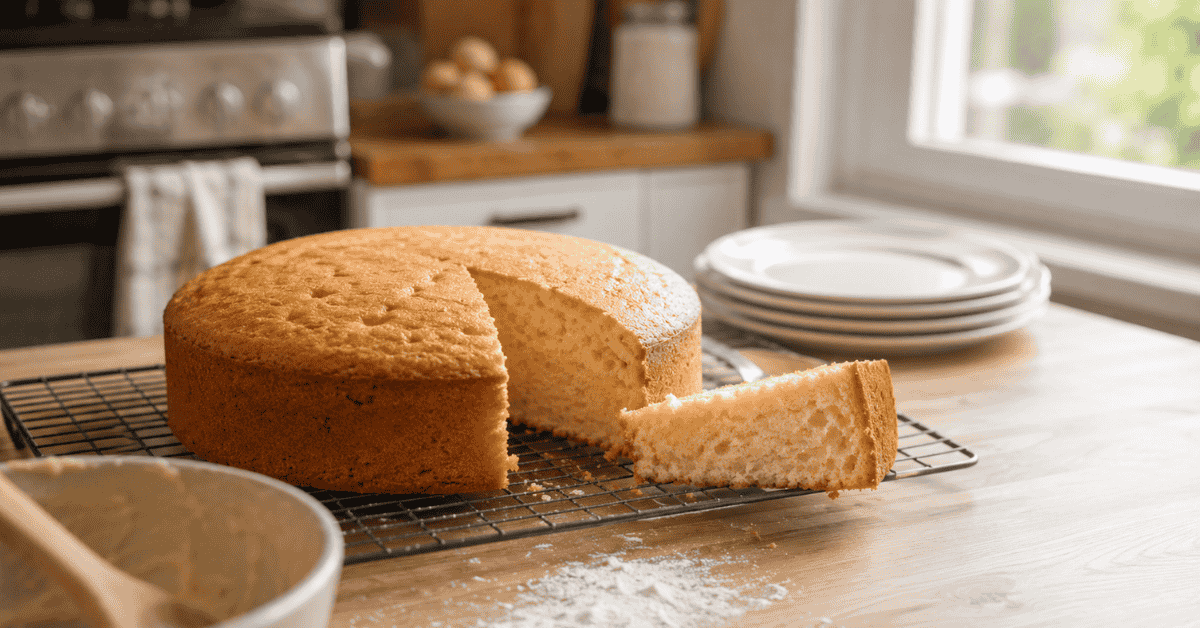
Let me be honest with you — a dry cake is one of the most disheartening things that can come out of an oven.
You followed the recipe. You set the timer. You even remembered to preheat. And yet, when you cut into that cake, the crumb feels chalky, tight, almost dusty. Every bite needs a sip of chai to wash it down. I’ve seen this happen in my classes with hundreds of students, and I’ve heard the same thing every single time: “But I did everything right!”
The thing is — you probably did most things right. A dry cake is usually the result of one small thing going wrong, not ten. And once you know what that thing is, it’s a genuinely easy fix.
After more than a decade of baking professionally — from Michelin-starred kitchens in Paris to my cloud kitchen here in Mumbai — I can tell you that dry cakes almost always trace back to a handful of root causes. Let’s go through each one in detail, because understanding the why is what separates a baker who guesses from a baker who actually knows.
First — What Makes a Cake Moist in the First Place?
Before we talk about what goes wrong, it helps to understand what makes a cake moist when it goes right.
Moisture in a cake comes from three sources working together: fat (butter, oil, cream), liquid (milk, buttermilk, water, eggs), and sugar (which is hygroscopic, meaning it literally pulls and holds water molecules). When these three are in balance — and when heat is applied correctly — you get a cake with a soft, tender crumb that stays moist even the next day.
When even one of these elements is off — too little fat, too much flour, too much heat — the balance breaks, and the result is dryness.
Now let’s talk about exactly where things go wrong.
Reason #1: Too Much Flour (The Sneakiest Culprit)
This is the number one reason cakes turn dry, and most people never suspect it.
When you scoop flour directly from the bag with your measuring cup, you’re compacting it. The cup ends up holding significantly more flour than the recipe intended — sometimes 20–30% more. That extra flour absorbs all the liquid in the batter, leaving nothing behind to keep the crumb tender.
The fix: Always spoon flour into your measuring cup and level it off with a flat knife. Better yet, invest in a kitchen scale and measure by grams. This one habit alone will transform your baking results permanently. A standard cup of all-purpose flour should weigh around 120–125 grams. If yours is weighing 145–150 grams, your cake never had a chance.
Reason #2: Overbaking (Even by Just 5 Minutes)
Cakes are more forgiving than bread, but they have a very specific window of doneness — and it’s narrower than you think.
Once the internal temperature of a cake crosses roughly 98–100°C, the starches have fully set and the moisture has largely evaporated. Every minute beyond that is another minute of moisture leaving the cake. The tragedy here is that a cake that was perfectly moist at 32 minutes can be noticeably dry at 38 minutes.
And here’s what trips people up: cakes often look done before they actually are, especially on top. The surface browns from radiant heat, not from internal doneness.
The fix: Start checking about 5–7 minutes before the recipe’s suggested time. Insert a skewer into the center — you want it to come out with just a few moist crumbs clinging to it, not perfectly clean. A clean skewer actually means your cake is slightly overbaked. Also, remember that the cake continues to cook for a few minutes after you remove it from the oven (residual heat), so pulling it out just slightly underdone is totally fine.
Reason #3: Oven Temperature Is Higher Than You Think
This one surprises a lot of home bakers: most domestic ovens run hotter than the temperature shown on the dial.
An oven dial set to 170°C might actually be running at 185–190°C. That difference causes the outside of the cake to set and dry out before the inside has a chance to fully cook and retain its moisture. The crust becomes hard, the interior stays tight, and you get an uneven, dry crumb throughout.
The fix: Get an oven thermometer — they cost very little and are absolutely worth it. Place it inside and check the actual temperature against your dial. Once you know your oven’s quirks, you can adjust accordingly. In my kitchen and in my courses, I always stress that you’re baking for the temperature inside the oven, not the number on the dial.
Reason #4: The Wrong Fat — or Not Enough of It
Fat is what makes a cake feel luscious and moist in your mouth. It coats the gluten strands, keeps the crumb tender, and contributes to that soft mouthfeel we associate with a good cake.
Here’s something interesting that most home bakers don’t realize: butter and oil behave very differently in a cake. Butter gives flavour and a slightly firmer crumb. Oil gives a more consistently moist result because, unlike butter, it stays liquid at room temperature. That’s why carrot cakes and banana cakes (which typically use oil) tend to stay moist for days, while butter-based cakes can begin to dry out faster.
Reducing fat in a recipe to make it “healthier” is one of the quickest ways to ruin the texture.
The fix: Follow the recipe’s fat measurements precisely. If you’re substituting butter with oil (or vice versa), know that 1 cup butter = about ¾ cup oil. If you’re making an eggless cake (which I teach extensively in my courses), compensating for the lost fat from egg yolks is critical — Greek yogurt, condensed milk, and sour cream are excellent additions that restore both moisture and richness.
Reason #5: Overmixing the Batter
This one feels counterintuitive — mixing more seems like it should make things better, right? But with cakes, the opposite is true.
When you overmix a batter after adding flour, you develop gluten. Gluten is the protein structure that gives bread its chew and structure — which is exactly what you don’t want in a cake. Overdeveloped gluten tightens the crumb, squeezes out moisture, and turns a light sponge into something that feels more like a dense rubber texture.
The fix: Once you add the flour to your wet ingredients, switch to a gentle folding motion and stop the moment you can no longer see streaks of flour. A few small lumps are absolutely fine. They’ll hydrate and disappear in the oven. In professional kitchens, we talk about mixing “until just combined” — that phrase exists for a reason.
Reason #6: Cold Ingredients That Didn’t Emulsify Properly
If you’ve ever noticed your cake batter looking slightly broken or curdled before it goes into the oven, this is likely why.
When you cream cold butter with sugar, or add cold eggs to a warm batter, the fat and liquid don’t emulsify properly. This means the batter doesn’t trap air the way it should, the structure is uneven, and the baked cake ends up with a tighter, drier crumb.
The fix: Take your butter, eggs, and dairy out of the fridge at least 45–60 minutes before you start baking. Room temperature means cool to the touch — not warm. If you’re in a hurry, you can place cold eggs in a bowl of warm water for 10 minutes. For butter, cut it into small cubes to help it soften faster. This small step makes a very visible difference in the final texture.
Reason #7: Not Enough Sugar (Yes, Really)
Most people associate sugar with sweetness. But in baking, sugar has a structural and moisture-retaining role that is just as important.
Sugar is hygroscopic — it attracts and holds onto water. This is why a well-sugared cake stays moist longer than one where sugar has been drastically reduced. When you cut sugar to reduce calories, you inadvertently also reduce the cake’s ability to retain moisture over time. The cake may seem fine when it’s fresh from the oven, but it dries out much faster.
The fix: If you want to reduce sweetness, you can reduce sugar by up to 15–20% without dramatically affecting moisture. Beyond that, you need to compensate — adding a little more liquid, using a more hygroscopic sweetener like honey or jaggery syrup, or increasing the fat slightly.
Reason #8: Skipping the Simple Syrup
This isn’t a correction to a mistake — it’s a professional technique that makes all the difference, especially for layered celebration cakes.
In professional bakeries (including my cloud kitchen, The Crème Company), we routinely brush baked cake layers with a simple syrup before assembling. Simple syrup is just equal parts sugar and water, heated until the sugar dissolves, then cooled. It soaks into the sponge, adds moisture, and extends the cake’s shelf life significantly.
The fix: After your cake layers have cooled completely, brush them lightly with simple syrup before adding your frosting or filling. Don’t drench — a light, even coating is enough. You can also flavor the syrup with vanilla, rose water, or cardamom to add a subtle layer of flavor.
Reason #9: Wrong Storage After Baking
You baked a beautiful, moist cake. You tasted it. It was perfect. Then you stored it — and the next day it was dry and sad.
This happens a lot. Cakes dry out quickly when exposed to air. Storing them uncovered, or in an airtight container while still slightly warm (which causes condensation and then rapid moisture loss), are both common storage mistakes.
The fix: Let the cake cool completely before wrapping or storing. Then wrap it tightly in cling film — layer by layer if possible — and store at room temperature for up to 2 days, or in the fridge for up to 5 days. If refrigerating, always bring the cake back to room temperature before serving, because cold dulls flavour and makes the crumb feel denser than it actually is.
A Quick Diagnostic: What Does Your Dry Cake Look Like?
Not all dry cakes have the same cause. Here’s how to identify the issue based on what you’re seeing:
What You See | Most Likely Cause |
Dry and dense throughout | Too much flour or overmixed |
Dry on the edges, moist in the center | Oven too hot, or baked too long |
Crumbly and falling apart | Not enough fat or liquid |
Tastes fine when fresh but dries fast | Not enough sugar, or poor storage |
Tight, rubbery texture | Overmixed batter / overdeveloped gluten |
Looks moist but feels dry in the mouth | Too little fat, or butter-based without enough liquid |
One More Thing — Eggless Cakes Need Extra Attention
I work extensively with eggless and healthier baking formulations, and I want to address this separately because eggless cakes are especially prone to dryness.
Eggs do a tremendous amount of work in a cake — they add fat (from the yolks), moisture (from the whites), structure, and leavening. When you remove eggs from a recipe without compensating, you’re removing all of that simultaneously.
For eggless cakes that stay moist, you need to think in terms of replacement for each function. Yogurt or buttermilk compensates for moisture and a little structure. Condensed milk or cream cheese adds richness and fat. Flaxseed meal or chia seeds help with binding. Getting this balance right is a skill in itself — and it’s exactly why I created dedicated resources and courses for eggless baking.
Final Thought
A dry cake isn’t a sign that you’re bad at baking. It’s a sign that one variable in a very precise process went slightly off. Now that you know what those variables are, you can isolate them, fix them, and bake something that genuinely surprises you with how good it is.
Baking rewards those who pay attention — not just to the recipe, but to the ingredients, the oven, the timing, and the little sensory cues along the way. Once you start baking that way, dry cakes become a thing of the past.
Happy baking!
— Chef Minali Zaveri Founder, The Crème Company & Mr. Shift | Mumbai Trained at Ferrandi, Paris | 9,000+ students taught
Want to go deeper into the science of sponges, eggless baking, and professional pastry techniques? Explore Chef Minali’s courses at chefminali.in/courses