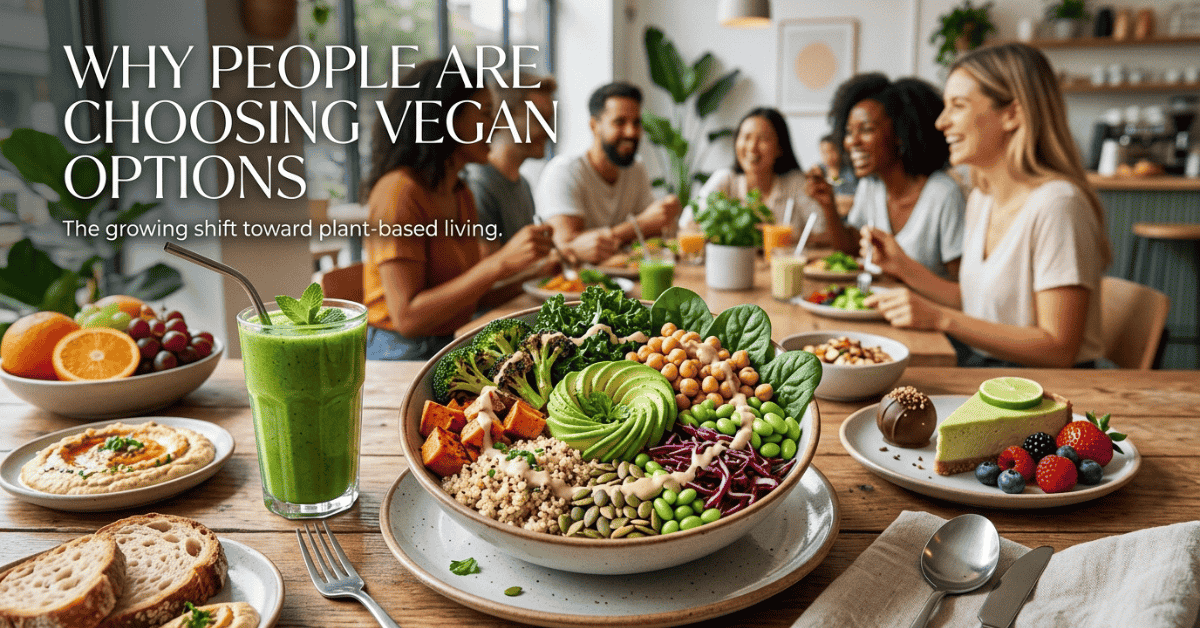
A few years ago, if you walked into most Mumbai restaurants and asked for a vegan dessert, you’d get a polite smile and a fruit salad. That was the extent of it. Today, the same restaurants have entire sections dedicated to plant-based sweets, dairy-free chocolate tarts, and cashew-based cheesecakes. Something has clearly shifted — and it’s not just a passing food trend.
Vegan eating, once considered a fringe lifestyle choice, has moved firmly into the mainstream. And honestly, the more I work with plant-based ingredients in my kitchen, the more I understand why. The reasons people are making this shift are layered, personal, and often more practical than people expect. Let me walk you through what’s really driving this change.
It Started With Health — And Stayed There
The first thing that nudges most people toward vegan options isn’t ideology. It’s a doctor’s visit, a blood report, or just the quiet realisation that their body doesn’t feel great after certain meals. A lot of people in India, especially in cities, are dealing with high cholesterol, lactose discomfort, sluggishness after heavy dairy meals, and digestion issues that they’ve been ignoring for years.
Plant-based eating can offer a natural way to address several of these concerns. Whole food vegan diets tend to be lower in saturated fats — the kind that come primarily from animal products and that are linked to cardiovascular issues. They’re typically higher in fibre, which directly supports gut health, something most urban Indians are quietly struggling with given how processed and low-fibre most modern diets have become.
What’s interesting is that people aren’t going fully vegan overnight. Most start by swapping one or two things — plant-based milk in their morning coffee, a dairy-free dessert, an oat-based snack instead of a cream biscuit. These small changes compound over time, and eventually the “vegan option” stops feeling like a compromise and starts feeling like a preference.
I’ve seen this in my own students. Many of them come to my eggless baking workshops not because they’re vegan, but because someone in their family has a dairy sensitivity or an egg allergy. They learn how beautifully cashew cream, coconut milk, or flaxseed eggs work in baking — and they never fully go back.
The Environmental Guilt Is Real — And Growing
There’s a generation of people in their twenties and thirties right now who grew up watching documentaries about climate change, reading about water scarcity, and seeing the visible impact of pollution. They’re making food choices through that lens in a way that older generations simply didn’t.
The numbers behind food’s environmental footprint are difficult to ignore once you’ve seen them. Animal agriculture is responsible for a significant share of global greenhouse gas emissions — estimates vary, but it’s consistently placed among the top contributors. Dairy farming in particular requires enormous amounts of water and land. Beef production is even more resource-intensive. Plant-based foods, by contrast, generally require far less land, water, and energy to produce.
This doesn’t mean every vegan product is automatically environmentally perfect — highly processed plant-based meats or out-of-season imported produce have their own footprint. But the broad direction is clear: eating closer to plants tends to carry a lighter environmental load.
For many young people today, choosing a plant-based option at a café or restaurant is one of the very few tangible, daily actions they feel they can take on climate. It’s not dramatic, but it feels meaningful. And that feeling of personal agency is genuinely powerful when you’re watching global environmental headlines every day.
Animal Welfare Conversations Have Changed
The way society talks about animal welfare has changed significantly over the last decade. Information about industrial farming conditions — how animals are kept, how they’re treated, what the process of mass food production actually looks like — is far more accessible now than it ever was. People are more aware, and awareness has a way of quietly changing behaviour over time.
You don’t have to be an activist to find yourself making different choices when you understand what’s behind your food. Many people who choose vegan options aren’t doing it from a place of judgment — they’re doing it from a place of discomfort with a system they’ve learned more about. That discomfort is a very human response.
What’s notable is that this shift is happening even in cultures like ours in India, where vegetarianism has deep roots but veganism was seen as extreme. The idea of reducing harm to animals is actually very much in line with values many Indian families already hold. Veganism, in that sense, is less of a foreign concept than people assume — it’s an extension of something many people were already partially doing.
The Food Itself Has Gotten Dramatically Better
This one is enormous and doesn’t get talked about enough. People aren’t choosing vegan options despite the taste anymore — they’re choosing them because the taste is genuinely good. That is a relatively recent development, and it changes everything.
When I started experimenting with dairy-free baking years ago, the options were limited and the results were inconsistent. Vegan butter was greasy and odd-tasting. Plant milks didn’t behave reliably in custards. Egg replacers were unpredictable. It required a lot of trial and error, and the results were often “good enough for vegan” rather than just good.
That is no longer true. Oat milk froths beautifully for coffee. Aquafaba — the liquid from canned chickpeas — whips into a meringue that is genuinely impressive. Cashew cream makes a silkier, cleaner-tasting panna cotta than dairy cream in many applications. Coconut cream cakes are moist in a way that many egg-and-butter versions aren’t. The ingredient science has caught up with the demand.
Restaurants, bakeries, and food brands have invested heavily in getting this right. When a plant-based chocolate truffle tastes just as rich and satisfying as a dairy one, people stop needing a reason to choose it. Taste is its own argument. And once someone has a genuinely great vegan meal, they stop associating the word with sacrifice.
Accessibility and Social Normalisation
Five years ago, asking for a vegan option in most Indian cities felt like making a special, slightly inconvenient request. Today, it’s on the menu. That shift in availability is not small — it fundamentally changes how often people try plant-based food, and by extension, how comfortable they become with it.
Swiggy and Zomato have entire vegan food filters. Supermarkets stock multiple varieties of oat milk, almond milk, and coconut yogurt. Cafés put oat milk on their regular menu, not as a special request. When something goes from niche to visible, it gets tried. When it gets tried, it gets normalised. When it’s normalised, it grows.
Social media has played a large role here too. Food content on Instagram and YouTube has made vegan cooking look approachable, colourful, and genuinely appealing. Watching someone make a beautiful vegan cheesecake in a home kitchen removes the mystique and the perceived difficulty. People feel like they can do it themselves — and many of them do.
There’s also a social dimension. When more people in a friend group or family choose plant-based options, it becomes easier for others to follow. Nobody wants to be the person who makes a dinner table complicated. When vegan food is good and available, social settings become much more comfortable for people who are curious but hesitant.
It’s Not All-or-Nothing — And That’s Why It’s Working
Perhaps the most important reason vegan eating has grown so dramatically is that most people aren’t approaching it as a strict, permanent identity. The rise of terms like “flexitarian” and “plant-forward” reflects the reality of how most people are actually eating — less animal product, more plants, but without rigid rules.
This pragmatic approach is far more sustainable than an all-or-nothing philosophy. Someone who eats vegan four days a week and isn’t strict on weekends is still meaningfully reducing their impact — on their health, on the environment, on animal welfare. The perfectionism around veganism that existed in earlier years has largely softened, and that softening has opened the door for millions of people who would never have identified as vegan to start making plant-based choices regularly.
In the baking world, this translates to a huge and growing audience for eggless, dairy-free recipes — not because everyone is vegan, but because more people are curious, more people have dietary restrictions in their household, and more people have realised that these recipes can be just as satisfying as conventional ones.
That is ultimately the story behind the vegan shift. It’s not one thing — it’s health, environment, ethics, taste, and accessibility all moving in the same direction at the same time. And when that many forces align, the change doesn’t just happen gradually. It accelerates.
Chef Minali Zaveri is a Mumbai-based pastry chef trained at Ferrandi Paris, with over 10 years of professional baking experience. She specialises in eggless, dairy-free, and health-conscious baking through her online masterclasses at The Crème Company.